If you have searched for a reliable Liberian businesses list and landed on a wall of outdated directories or vague overviews, you are not alone. Liberia's private sector is more dynamic than most external coverage suggests — mining giants, homegrown telecom operators, regional banks, boutique hotels, and a fast-emerging agro-processing scene all compete for capital and talent right now. This article organizes 25 of the most significant companies and industries across eight key sectors, giving entrepreneurs, diaspora investors, and curious visitors a single, current reference point. Whether you are scouting opportunities, planning a trip, or simply want to understand what drives the Liberian economy, read on.
Mining and Natural Resources: The Backbone of Liberia's Economy
Mining accounts for roughly 30–40% of Liberia's export earnings, making it the single most important sector for foreign exchange. Iron ore, gold, and diamonds anchor the industry, but rubber remains a legacy export that still employs tens of thousands of rural Liberians.
1. ArcelorMittal Liberia
The largest private employer in the country, ArcelorMittal Liberia operates the Yekepa iron ore mine in Nimba County and a 267-kilometre railway corridor to the port of Buchanan. Annual production capacity exceeds 5 million tonnes of iron ore concentrate. The Phase 2 expansion, targeting 15 million tonnes, represents one of the biggest single investments in West African mining history. For diaspora investors watching Liberia's infrastructure story, this project is the clearest signal of long-term capital commitment.

2. Bea Mountain Mining Corporation (BMMC)
BMMC, a subsidiary of Aureus Mining (now part of the Avesoro Resources group), operates the New Liberty Gold Mine in Bomi County — Liberia's first commercial gold mine. It reached first gold pour in 2015. The operation demonstrates that Liberia's greenstone belts hold significant untapped gold potential, a fact that continues to attract junior exploration companies from Canada and Australia.
3. Bridgestone Firestone Natural Rubber Company
Firestone's Harbel plantation, established in 1926, is one of the largest rubber plantations in the world — covering approximately 190 square miles. Bridgestone Firestone employs around 8,000 workers and supports a community of over 80,000 residents on-site. Its sheer scale makes it a foundational pillar of Liberia's agricultural-export economy, and its supply-chain infrastructure (roads, clinics, schools) fills gaps that the state has historically struggled to cover.
Banking and Financial Services: Financing the New Liberia
Liberia's banking sector has grown from near-collapse post-conflict to a functioning multi-bank system. Mobile money has accelerated financial inclusion dramatically, with the Central Bank of Liberia reporting that mobile money accounts now outnumber traditional bank accounts nationwide.
4. Ecobank Liberia
Ecobank Liberia is part of the pan-African Ecobank Transnational group, which operates in 33 African countries. It offers the broadest branch and ATM network in Liberia and is the go-to institution for cross-border business transactions. Its Xpress Account — a mobile-first product — has brought banking to market traders and rural smallholders who previously operated entirely in cash.
5. International Bank (Liberia) Limited — IBLL
Founded in 1948, IBLL is one of the oldest continuously operating banks in Liberia. It survived the civil war era and has repositioned itself as a strong SME lender. Its trade-finance desk is particularly active in supporting importers of construction materials and consumer goods — two sectors booming as Monrovia's population grows past 1.5 million.
6. Lonestar Cell MTN Mobile Money
Strictly speaking a telecom product, Lonestar MTN Mobile Money functions as a de facto bank for millions of Liberians. Peer-to-peer transfers, merchant payments, and salary disbursements all flow through it. The platform processed an estimated LRD 50+ billion in transactions in recent years. Any entrepreneur building a retail or service business in Liberia must integrate mobile money from day one — it is not optional.
Telecommunications: Connecting a Nation
Liberia's telecom sector is a two-horse race between Lonestar Cell MTN and Orange Liberia, with a handful of smaller ISPs competing for the data market. Submarine cable connectivity — via the ACE cable — has improved bandwidth and reduced costs, though last-mile infrastructure remains a bottleneck outside Monrovia.
7. Lonestar Cell MTN
Lonestar Cell MTN is Liberia's market leader with the widest geographic coverage. It is a joint venture between MTN Group (South Africa) and local shareholders. Beyond voice and data, its mobile-money platform (described above) makes it arguably the most economically influential private company in the country. The company's 4G LTE rollout in Monrovia is ongoing, and rural tower expansion is tied to government universal-access funding.
8. Orange Liberia
A subsidiary of the French Orange Group, Orange Liberia competes aggressively on data pricing and has targeted younger, urban consumers with social-media bundles. Its Orange Money service mirrors MTN's offering. Orange's investment in fiber backhaul within Monrovia has made it the preferred carrier for businesses needing more reliable fixed broadband — a real differentiator in a market where power and connectivity are both unreliable.
Agriculture and Agro-Processing: The Sector with the Most Upside
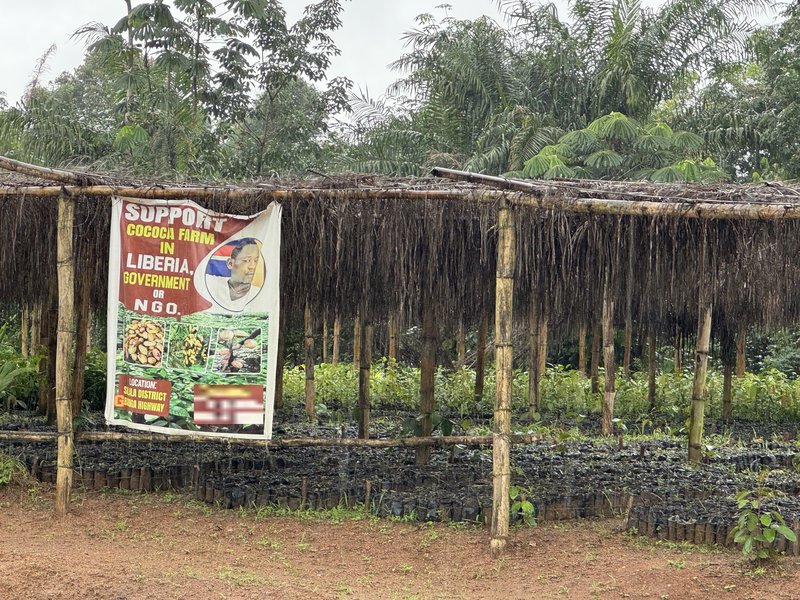
Agriculture employs roughly 70% of Liberia's workforce, yet agro-processing — adding value to raw produce before export — remains dramatically underdeveloped. That gap is exactly where the next generation of Liberian entrepreneurs and diaspora investors are placing bets. Cocoa, palm oil, cassava, and fish are the four commodities with the clearest processing opportunities right now.
9. Cavalla Rubber Corporation
Cavalla Rubber operates in Maryland County and is one of the few large-scale rubber operations with meaningful Liberian equity participation. Its model — blending plantation production with outgrower schemes — is increasingly cited by the World Bank as a template for inclusive agricultural development in post-conflict economies.
10. Golden Veroleum Liberia (GVL)
GVL is a large-scale palm oil producer operating in Sinoe and Grand Kru Counties. It is a subsidiary of Singapore-listed Golden Agri-Resources. GVL's concession covers over 220,000 hectares, though active planting covers a fraction of that. The company has faced scrutiny over land rights — a genuine trade-off investors must understand. Community Land Agreements (CLAs) are now legally required, and GVL's experience shows that skipping community consultation is not just an ethical issue; it creates operational risk and project delays.
11. Liberia Cocoa Corporation (LCC)
Cocoa is Liberia's most promising specialty-export crop. LCC aggregates smallholder production and is working with international buyers on traceability certification. Liberian cocoa commands premium prices in European craft-chocolate markets because of its genetic diversity — some trees are direct descendants of pre-war heirloom varieties. For diaspora investors, a cocoa fermentation and drying facility in Nimba or Lofa County could realistically generate returns within three to five years.
Shipping, Logistics, and Maritime Services: Liberia's Hidden Giant
12. Liberian International Ship and Corporate Registry (LISCR)
The LISCR is not a shipping company — it is the administrator of the Liberian ship registry, the second-largest ship registry in the world by gross tonnage, managing over 4,500 vessels. It generates tens of millions of dollars annually for the Liberian government. LISCR is headquartered in Virginia, USA, which underscores how Liberia's maritime economy is partly diaspora-managed. For legal and financial services firms targeting the maritime sector, LISCR's network is a direct entry point.
13. Freeport of Monrovia / National Port Authority (NPA)
The NPA manages the Freeport of Monrovia, Liberia's primary deep-water port and the gateway for roughly 85% of the country's imports. Container throughput has grown steadily, and a Chinese-financed port expansion is under negotiation. Logistics companies, freight forwarders, and cold-chain operators are all underserved at the Freeport — a concrete gap for entrepreneurs willing to invest in warehousing and last-mile distribution.
14. DHL Liberia
DHL operates in Monrovia and provides the most reliable international express courier service in the country. For e-commerce entrepreneurs and export businesses, DHL's presence is critical infrastructure. Its rates are high relative to regional peers, which itself signals an opportunity for a well-capitalized local logistics competitor to undercut on domestic routes.
Hospitality and Tourism: A Sector Ready to Break Out
Liberia's tourism infrastructure is small but growing fast. The combination of pristine Atlantic beaches, surfable waves at Robertsport, rainforest biodiversity, and a genuinely warm local culture gives the country raw material that very few West African destinations can match. Browse Liberian hotels and resorts on TrueLiberia to see the current landscape for yourself.
15. RLJ Kendeja Resort and Villas
RLJ Kendeja, located on the Atlantic Ocean just outside Monrovia, is the closest thing Liberia has to an international luxury resort. It offers 76 villas, a conference center, multiple restaurants, and a private beach. Owned by RLJ Companies (founded by Robert L. Johnson, founder of BET), it is a flagship example of diaspora capital reshaping Liberia's hospitality sector. Room rates range from $180 to $350 per night — competitive with mid-range Accra or Nairobi properties.
16. Mamba Point Hotel
Mamba Point Hotel sits on a hilltop in central Monrovia with views over the Atlantic. It has long been the preferred address for NGO staff, diplomats, and business travelers. Its rooftop bar is a genuine Monrovia institution. For visitors wanting to understand the city's professional and expatriate social scene, Mamba Point is the right base. Find more hotel options across Liberia at TrueLiberia.
17. Liberia Tourism Authority (LTA)
The LTA is the government body responsible for promoting and regulating tourism. It has been increasingly active in marketing Liberia at international travel expos and partnering with platforms like TrueLiberia to digitize the country's tourism offer. For businesses in hospitality, getting listed and certified through the LTA opens doors to government-backed promotion and inbound tour-operator partnerships.
Retail, Consumer Goods, and the Informal Economy
18. Waterside Market
Waterside Market in central Monrovia is the largest open-air market in Liberia and a microcosm of the informal economy. Thousands of traders sell everything from electronics to fabric to fresh produce. It is not a single company but an ecosystem — and understanding Waterside is essential for any consumer-goods brand trying to reach Liberian households at scale. Distribution through Waterside's network of wholesalers is often faster and cheaper than building a formal retail chain from scratch.
19. Shoprite Liberia (Seah Mall)
Shoprite opened its Monrovia outlet at Seah Mall, marking the entry of formal supermarket retail into Liberia. Its arrival changed consumer expectations overnight — Liberians now compare prices, expect consistent stock, and demand cleaner shopping environments. Shoprite's supply chain relies heavily on imports, which highlights the opportunity for local food processors to substitute imported goods with Liberian-made alternatives at competitive prices.
20. Total Energies Liberia
TotalEnergies operates the largest fuel retail network in Liberia, with stations across Monrovia and key upcountry corridors. Beyond fuel, its convenience-store format at flagship stations is introducing Liberians to modern forecourt retail. The company also distributes LPG cooking gas — a product with enormous growth potential as Liberia transitions away from charcoal.
Digital Infrastructure, Fintech, and Emerging Sectors
21. Africell Liberia
Africell entered the Liberian market as a third mobile operator, injecting price competition into a previously comfortable duopoly. Its aggressive data pricing has benefited consumers and small businesses alike. Africell's parent company has a strong track record in Sierra Leone and Uganda, suggesting it will push deeper into Liberia's underserved rural data market over the next five years.
22. iBi Pay
iBi Pay is one of the most promising homegrown fintech startups in Liberia. It offers a digital wallet and payment gateway designed specifically for the Liberian market, including support for Liberian dollar transactions — a critical feature that many regional fintech platforms ignore. For local entrepreneurs building e-commerce or service platforms, iBi Pay is the most practical payment integration to start with.
23. Liberia Electricity Corporation (LEC)
LEC is the state-owned utility responsible for power generation and distribution. Its grid currently reaches only a fraction of the population, which is why diesel generators and solar mini-grids are ubiquitous. The Mount Coffee Hydropower Plant rehabilitation — completed with support from the European Investment Bank — restored 88 MW of capacity. Every business in Liberia is affected by LEC's performance, and the gap between grid supply and demand remains the single biggest constraint on manufacturing and cold-chain investment.
24. Liberia Broadcasting System (LBS) and Private Media
Liberia has a vibrant, independent media sector. LBS, ELBC radio, and a cluster of private FM stations and online news outlets (FrontPageAfrica, The Bush Chicken) collectively shape public opinion and business reputation. For any company doing business in Liberia, earned media in local outlets is more trusted than paid advertising — a trade-off that matters for brand-building strategy.
Tourism Experiences and the Visitor Economy
25. Robertsport Surf and Eco-Tourism Cluster
Robertsport, in Grand Cape Mount County, has emerged as Liberia's most internationally recognized tourism destination. It hosts the Liberia Surf Classic, attracts surfers from Europe and North America, and supports a growing cluster of guesthouses, surf camps, and kayak tour operators. The community-based model here — where local families own most accommodation — means tourism revenue stays in the local economy. Explore Liberia's beaches and outdoor experiences on TrueLiberia.
What This Liberian Businesses List Tells Us About Opportunity
Looking across all 25 entries, a clear pattern emerges. The biggest companies in Liberia are mostly extractive or infrastructure-adjacent — mining, rubber, ports, telecom. The fastest-growing opportunities, however, are in sectors that add value to existing resources: agro-processing, cold-chain logistics, fintech, and tourism experiences. These are sectors where Liberians in the diaspora — with capital, skills, and networks — have a genuine structural advantage over foreign competitors who lack cultural fluency and local trust.
Common mistakes investors make include underestimating land-rights complexity (always engage a Liberian attorney before any agricultural concession), overbuilding formal retail before understanding informal distribution channels, and ignoring mobile money as a payment infrastructure (it is not a workaround — it is the primary system).
- Mining and rubber: Dominated by multinationals; best opportunities are in services and supply chains
- Banking and fintech: High growth, especially mobile-first products targeting the unbanked
- Agro-processing: Largest untapped opportunity for Liberian entrepreneurs
- Hospitality and tourism: Early-mover advantage still available; infrastructure gaps are the main constraint
- Logistics and maritime: Underserved at every level from port to last-mile delivery
- Digital infrastructure: Improving rapidly; data costs falling, creating new consumer markets
For a broader view of what Liberia has to offer — from restaurants and nightlife to shopping and services — visit TrueLiberia's homepage and use the full business search directory to find verified listings across every category. Whether you are a visitor, a returning Liberian, or an investor doing early due diligence, TrueLiberia is your most current and comprehensive guide to the Liberian business landscape. Discover what Liberia's economy has to offer — and get started today.
For further reading on Liberia's investment climate, consult the Liberia Investment Authority (LIA), the official government body for investment promotion and facilitation.